Extra! Extra! Hot Alien Crash Lands in 2020, Probably Comes in Peace

What a fucking decade.

It has been equal parts horrible and equal parts glorious for me. A lot of things came to a violent end: my older brother, my innocence (if you can believe it ever existed), my sex column, my modeling career and my will to live (at least for a time). But there was a lot of creation too: I finally acquired self-confidence, became a PAID writer (praise be), fell in love with both a small hairy comedian and a large hairy myth (a la the legendary Bigfoot) and gave birth to this Hot Alien you see before you, my pride and joy. 

Things could have been better and things could have been worse these past 10 years, but one thing is for certain: I’m completely different than the person I was in 2010—a totally-depressed college girl who barely knew what life was like outside of a small town in Maryland. Now I’m a sometimes-depressed 30-year-old in the San Francisco Bay Area who researches ghosts, aliens and mythical animals in her spare time. Remember: Things could be worse.

Cryptid Creatures: “The Feel Good Field Guide of 2019”

Kelly Milner Halls and Rick Spears go way back. Not as far as the legends featured in their work, but far enough to have worked on eight projects together, including their latest book Cryptid Creatures, which just hit the real (and cyber) shelves today. 

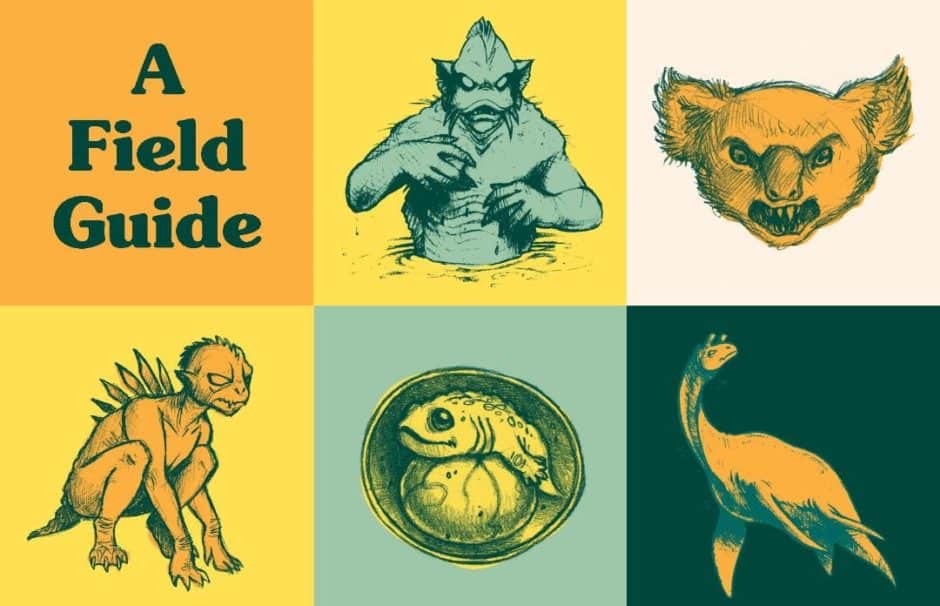
Cryptid Creatures is a field guide featuring 50 mythical animals (AKA cryptids). Each entry presents a description of the creature, its history, and evidence suggesting that it exists—which often includes colorful accounts told in newspaper articles. Every cryptid also gets a “reality rating” represented by a scale of 1-6 stars. One star means the cryptid has been confirmed as a hoax, while six stars means the once-mythical creature has been proven real. 

Cryptids covered in the book range from well-known beasts like Bigfoot and the Loch Ness Monster, to the more obscure—such as the Iliamna Lake Monster of Alaska (which has the head of a wolf and body of an orca whale) and the Con Rit (a centipede purported to be larger than any known shark).

The creature illustrations depict the beasts in two stages of their lives, both as full-grown monster legends, and also as baby beasts—when the creatures were nothing but whispered tales around the campfire.

Halls is a prolific children’s book author and freelance writer, and Spears is an illustrator and sculptor with a focus on animals, science, and natural history.

I talked to both about the artistic inspiration behind Cryptid Creatures, why cryptids should be examined like real animals, and how they bonded over the bizarre in the first place.

So how did you two meet? 

K: Well, I was working on this book called Dino-Trekking in 1996, and I was looking for a paleontology expert from Georgia State to interview. And some guy in Georgia—I can’t remember who it was—said, “You really shouldn’t be talking to me, you should be talking to Rick Spears. He’s everything dinosaur.” And I said how do I get a hold of him?

R: He made it seem like I was a crackpot or something.

K: Well, so was I, so it worked out. Rick was just the best; he and I talked and he asked. “Who is illustrating the book?” And I said we don’t have a budget for illustrating, and he said, “Well, I’ll do it for free.” And I said, ‘“This guy is the best guy ever!” 

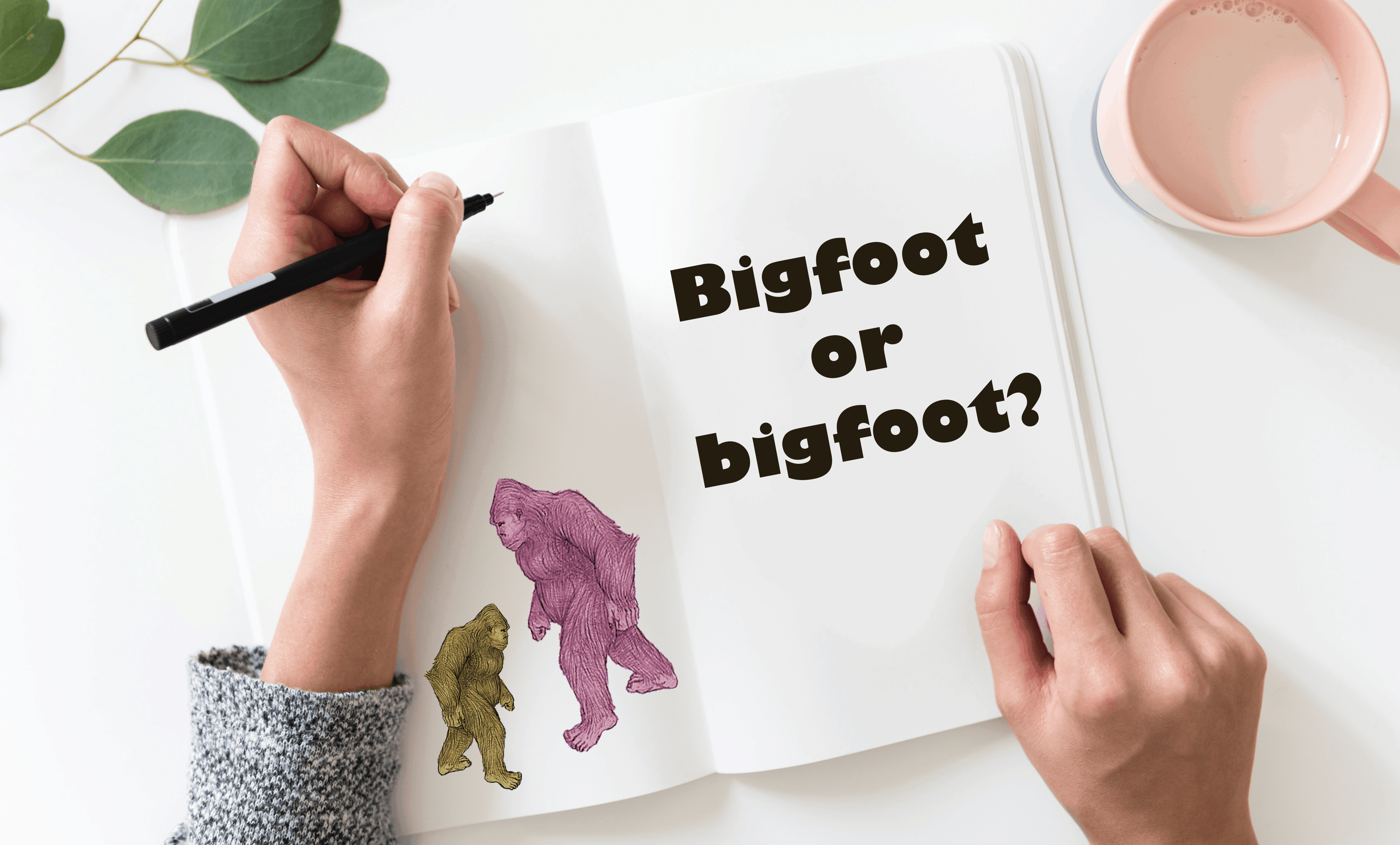
Should I Capitalize the Word ‘Bigfoot?’ The B vs. b Debate

I’ve been making the decision to capitalize the word Bigfoot for the last year and a half now, and it occurred to me recently that I might be doing it all wrong.

While curled up in bed last week, snug as a bigfoot in a rug, I flipped through the pages of books like Sasquatch: Legend Meets Science, Monster Trek, Searching for Sasquatch, Bigfoot, Yeti, and the Last Neanderthal, Anatomy of a Beast, etc., and I realized there was no consensus on capitalization. Authors would use big B’s and little b’s at different times—sometimes with multiple variations in one text.

Were these decisions arbitrary? I refused to believe it! If each author had enough time to write a book about Sasquatch, then they surely had enough time to deeply ponder the writing mechanics—or at least do whatever a random editor told them to do.

I decided to capitalize the word Bigfoot mostly because that’s what I’d seen most modern journalists doing. I was a mimicker. A sheep! A wild, black sheep by nature—but a sheep, nonetheless. I couldn’t believe I had overlooked this for so long.

It plagued me for hours, even whole days. I would lie awake for minutes. I nearly dreamed about it. It was clear that I was a fraud. How could I call myself a professional writer if I hadn’t solved the ultimate Bigfoot mystery of B vs. b?